
Posted by Scott Ford on Jan 8th 2026
Differences Between Goat and Cow Portable Milking Machines
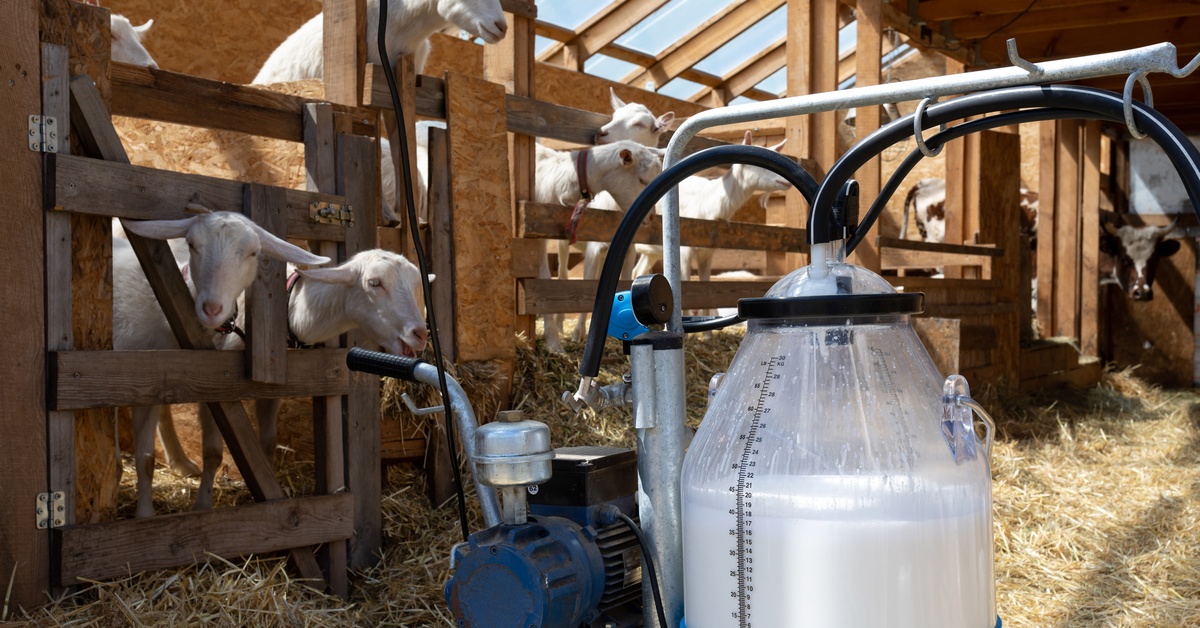
Portable milking machines offer convenience and flexibility, enabling farmers to milk their animals anywhere. While farmers use vacuum-based milk extraction on both cattle and caprines, these animals’ unique physiologies require specialized machinery. The wrong type of milking equipment may not fit your livestock properly, causing discomfort and potential tissue damage. This can lead to health complications, such as mastitis, and reduced milk yield. Learn how the different features of goat and cow portable milking machines can boost efficiency while protecting animal health.
Teat Cup and Inflation Sizing
The size of teat cups and inflations varies depending on whether you’re milking cows or goats. The inflation is the rubber or silicone liner inside the teat cup, and it comes into direct contact with the animal’s teat. Standard-sized goats may be able to use the same inflations as cows with smaller teats, like Jerseys and Guernseys. However, miniature goats require much smaller inflations.
Using a teat cup that is too large or too small can cause significant issues for livestock. Oversized teat cups may fail to create a proper seal, leading to inefficient milking and potential discomfort. Undersized cups can apply excessive pressure, causing pain or even tissue damage.
Pulsation Rate Variance
Pulsation rates dictate how frequently the liner opens and closes around the teat, simulating the natural nursing rhythm of offspring. Cows generally require a slower pulsation rate, typically around 50 to 60 pulsations per minute, to match the nursing style of a calf. This slower rhythm provides a necessary rest phase, which preserves udder health during extended lactation cycles in cattle.
Goats differ because they require a faster pulsation rate, usually ranging between 70 and 90 pulsations per minute. Their physiology responds better to this quicker stimulation, which encourages a faster let-down and complete milk out.
Factors like breed, lactation stage, and milk production levels can affect the ideal pulsation rate for cows and goats. High-yielding animals or those in peak lactation may benefit from a slightly higher pulsation rate to maximize milk flow and maintain udder health. However, the rate should still fall within the recommended range for the species.
Vacuum Pressure Levels
Vacuum pressure, measured in kilopascals (kPa) or inches of mercury (Hg), provides the suction necessary to extract milk from the udder. Cows typically require a higher vacuum level, often around 12-14 inches Hg during peak milk flow, due to the larger volume of milk and the heavier physical structure of the udder. This stronger suction supports the weight of the claw and moves milk efficiently through longer hoses.
Conversely, goats have more delicate udder tissue that requires a gentler touch to prevent injury and stress. A portable goat milking machine operates at a lower vacuum level, generally around 10-12 inches Hg, which suffices for their lighter flow. Excessive pressure on a goat’s udder leads to pain and congestion, which can lead to incomplete milking and further discomfort.
Importance of Vacuum Stability
Maintaining a stable vacuum level protects the animal’s health and the quality of the harvested milk. Fluctuations in vacuum pressure result in “teat impact,” where milk droplets are pushed back into the teat canal, increasing the risk of bacterial infection. High-quality portable milkers include precision regulators and gauges that allow operators to monitor and adjust vacuum levels instantly.
Milk Bucket Capacity
Portable milkers for cows usually come equipped with larger buckets, often ranging from 4-8 gallons(35 to 70 lbs) or more. This larger capacity minimizes the need for frequent emptying, allowing the operator to milk multiple cows in succession efficiently. Goat milkers frequently utilize smaller buckets, as the volume per animal is substantially lower than that of a dairy cow. A 4 Gallon (35lb) bucket might suffice for milking several goats without becoming too heavy for the operator to transport. However, operations milking many goats might opt for higher-capacity buckets.
Here are five key features to look for when selecting a high-quality bucket for your portable machine:
- Ergonomic handles make lifting and carrying full buckets safer and less strenuous for farm staff.
- Seamless designs eliminate crevices where bacteria harbor, promoting higher milk quality standards.
- Secure gaskets create an airtight seal to maintain consistent vacuum pressure throughout the milking session.
Cluster Configuration Differences
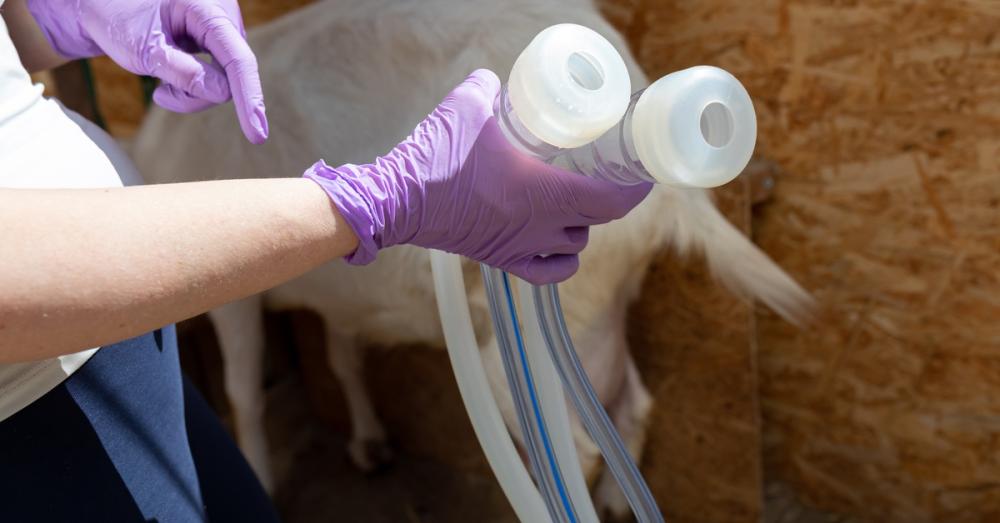
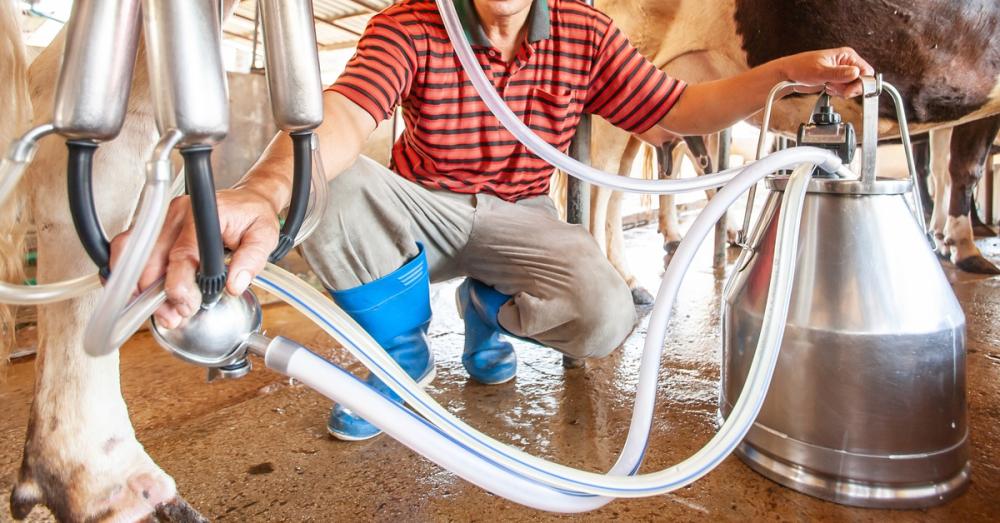
Portable milking machines for cows and goats use different cluster configurations. The “cluster” refers to the assembly of the claw, shells, liners, and air tubes that attaches to the animal. Cow clusters always feature four teat cups, corresponding to the four quarters of a bovine udder. This weightier assembly requires straps, hangers, or a suspension arm to prevent the cluster from dragging on the ground or pulling excessively on the teats.
In contrast, goats have only two teats and more delicate udders. As such, their clusters consist of just two cups and a much lighter claw assembly. Using a heavy assembly on a goat could strain their teats and udder, leading to discomfort, tissue damage, or incomplete milking.
Mobility and Frame Design
Portable milkers must be easy to maneuver around the barn, stall, or pasture to reach the animals effectively. Cow milkers often feature a larger, more rugged chassis with wider wheels to support the heavier pump and motor required for higher vacuum levels. These robust frames navigate uneven barn floors and carry the weight of larger milk buckets with stability.
Goat milkers may utilize a more compact frame design, as the components are lighter and the collection buckets are smaller. This compact footprint allows the machine to fit into tighter spaces, such as narrow goat pens or milking stands.
Claw Design and Shutoffs
The claw serves as the manifold where milk from the teat cups collects before moving into the main milk hose. Cow claws typically feature automatic shut-off valves that close if a cup falls off, preserving vacuum pressure for the remaining quarters. This feature is vital because a significant vacuum drop causes the entire unit to fall, risking contamination.
Goat claws also incorporate shut-off mechanisms, but the design accounts for the different milking behaviors of goats. Many goat clusters allow individual valves to be closed manually, which helps when milking animals with uneven production. Some goat clusters utilize automatic valves that react quickly to kicks or movement, protecting the vacuum system.
Choosing the right portable milking machine is essential for a successful and humane dairy operation. When choosing the right type for your animal, consider factors like teat size, milk yield, and udder sensitivity to ensure a proper fit. Within the same animal species, different breeds have varying udder shapes and milk production levels. Always consider your breed’s unique characteristics when choosing a portable machine for efficient and safe milking.